












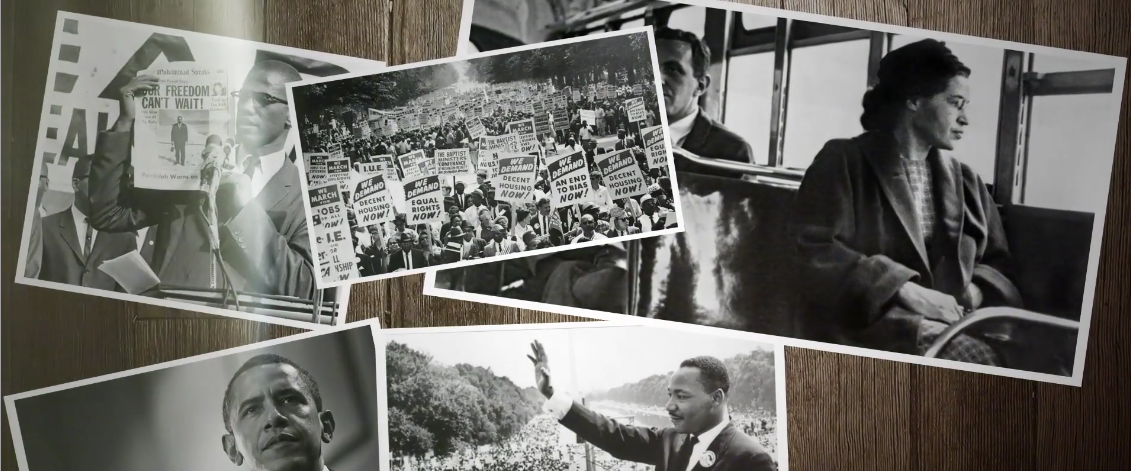
With the 19th approaching, many students view Martin Luther King Jr. Day as simply a break from school rather than a moment of honor. Signed into law on Nov. 2, 1983, by President Ronald Reagan, the holiday was created to recognize Dr. King’s leadership in the civil rights movement and his fight for justice, equality, and nonviolent change. Over time, however, the meaning of the day has shifted for many Americans, becoming more associated with time off than with the message behind it. As social and racial issues continue to shape the nation, the question remains whether Martin Luther King Jr. Day still serves its original purpose or if its significance has faded in modern culture and politics.
As many learn in elementary school, Martin Luther King Jr. Day, also known as MLK Day, recognizes Dr. King for his role in the civil rights movement, particularly his efforts to create equality for people of different races, especially African Americans. His work left a lasting impact that continues across generations, turning his legacy into both a national holiday and a name frequently taught in schools.
But how much do people truly know about who he was? U.S. history teacher Veronica Hayles said many students only recognize a limited version of Dr. King. “They know about the Million Man March, they know about ‘I Have a Dream,’ and they know that he was assassinated,” Hayles said. “That’s kind of where it begins and ends.” She added that this narrow focus reduces one of the most important figures in American history to just a few moments.
This raises the question of whether the education system plays a role. Many schools heavily focus on Dr. King in elementary school and then return to the topic in 11th grade, leaving large gaps in between. Hayles said the pressure of testing also affects how history is taught. “Having a test to worry about at the end of the year doesn’t help because you’re on a timeline,” she said.
U.S. history teacher Gary Willis shared a similar concern. He said special lessons in January can feel disconnected from the broader curriculum. “Students only know the facts they learned in middle school. They don’t know the more important, nuanced context.” As a result, students may question why the day is celebrated if they do not fully understand its meaning.
Hayles also pointed out that segregation has not completely disappeared. “There’s a large population of folks who immigrate from certain areas and tend to stay in their own spaces,” she said. While modern segregation may be driven more by choice than by law, it still exists and continues to shape communities today.
Ultimately, Martin Luther King Jr. Day should be more than a day off or a brief classroom discussion. It should serve as a reminder of the unfinished work Dr. King dedicated his life to and an opportunity to understand why his message still matters. When history is taught only for memorization or grades, its deeper meaning is lost. Learning about Dr. King should focus on his beliefs, sacrifices, and the resistance he faced, not just key speeches or dates.
Understanding history is essential because history often repeats itself when its lessons are ignored. Inequality, segregation, and social division still exist in new forms, making Dr. King’s message just as relevant today as it was decades ago. If students are encouraged to engage with history thoughtfully and consistently, Martin Luther King Jr. Day can reclaim its purpose as a day of reflection, education, and action rather than simply another break on the calendar.